Forget the Frozen Drink: Jalisco's Bartenders Are Mixing Tequila Like You've Never Seen
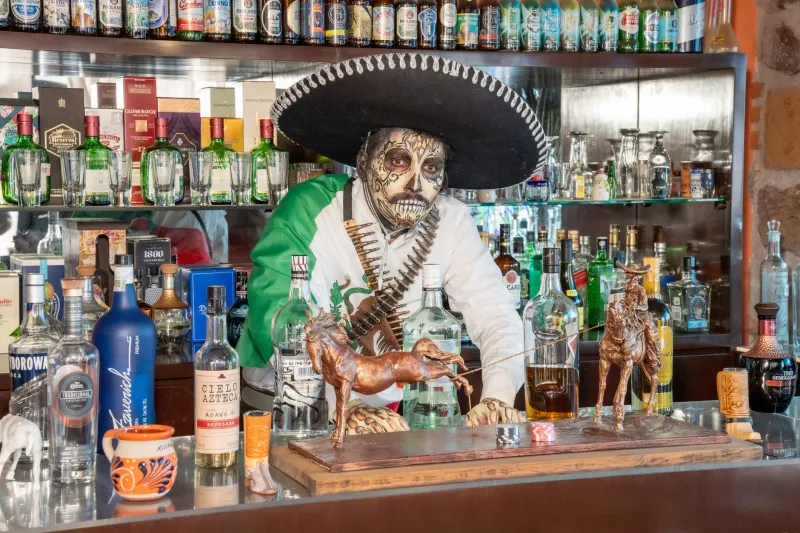
There's a moment that happens to almost every American visitor who bellies up to the bar at a proper Jalisco cantina. They glance at the cocktail menu expecting the usual suspects — margarita, paloma, maybe a tequila sunrise — and instead find something that reads like a love letter written in ingredients they can barely pronounce. Tamarind. Hoja santa. Tepache. Chapulines salt.
That moment of confusion? That's exactly what the bartenders here are going for.
"People come in with a picture in their head of what tequila tastes like," says Rodrigo Fuentes, head bartender at a distillery bar just outside the town of Tequila. "My job is to erase that picture and draw a new one." Rodrigo has been crafting cocktails in Jalisco for over a decade, and he's watched the local cocktail scene transform from something purely functional — tequila, lime, salt, done — into a full-blown culinary movement.
The Margarita Isn't Going Anywhere, But It's Not the Point
Let's be clear: nobody in Jalisco is anti-margarita. A well-made one, built with fresh-squeezed lime juice and a quality blanco, is still one of the more satisfying things you can put in your hand on a hot afternoon. The issue isn't the drink itself. It's the idea that the margarita represents the ceiling of what tequila can do in a glass.
For American drinkers, tequila has long been trapped in a narrow lane — party shots, frozen blenders, citrus-forward cocktails built for volume rather than nuance. Meanwhile, back in Jalisco, bartenders have been quietly doing something much more ambitious. They've been treating tequila the way a serious sommelier treats wine: as an ingredient with terroir, with depth, with the ability to carry complex flavor conversations.
The results are drinks that don't just taste good. They taste like somewhere specific.
Ingredients You Won't Find at Your Local Grocery Store
Walk into any ambitious bar in the Tequila region and you'll start seeing the same ingredients cycle through the menu in surprising ways. Tamarind paste shows up constantly — its sweet-sour funk is a natural bridge between the vegetal punch of a highland blanco and the warmth of dried chiles. Hibiscus (jamaica) gets cold-steeped and used as a base for shrubs that add floral tartness without the artificiality of a flavored syrup.
Then there's tepache, the fermented pineapple drink that's been part of Mexican street culture for centuries. Bartenders here have started using it as a cocktail modifier — a splash of tepache in place of simple syrup adds a funky, slightly boozy sweetness that plays brilliantly against an aged reposado.
"Tepache and reposado is one of those combinations that just makes sense," says mixologist Elena Vargas, who runs the cocktail program at a Guadalajara bar that sources all its spirits from small Jalisco producers. "The vanilla and caramel notes in the tequila, the pineapple ferment — it's like they were always supposed to be together."
Hoja santa, a large-leafed herb with a flavor somewhere between anise and black pepper, has become something of a signature ingredient in forward-thinking Jalisco cocktails. Muddled fresh, it creates a savory, aromatic base that makes a tequila cocktail feel more like a culinary experience than a happy hour order.
The Smoke Factor
One of the more interesting trends happening in Jalisco bars right now is the deliberate blurring of the line between tequila and mezcal. Purists on both sides might bristle at this, but the results in the glass are hard to argue with.
Some bartenders are building cocktails that use a small float of mezcal on top of a tequila base — just enough smoke to add complexity without overwhelming the agave character underneath. Others are incorporating smoked ingredients: charred citrus, mezcal-rinsed glassware, or a pinch of smoked salt that shifts the entire aromatic profile of the drink from the moment it hits your nose.
"Smoke is a flavor that belongs to this region," Rodrigo explains. "Agave has always had a relationship with fire. Why wouldn't that show up in the cocktail?"
For US drinkers who've become comfortable with the craft cocktail movement's obsession with smoke — smoked old fashioneds, peated whisky cocktails — this approach will feel familiar but also distinctly Mexican in a way that's hard to fake.
A Roadmap for Ordering (and Recreating) at Home
So what does all of this mean if you're sitting at a Jalisco bar trying to figure out what to order? Or if you're back home in Austin or Chicago trying to approximate the experience in your own kitchen?
A few guiding principles from the bartenders we talked to:
Start with the tequila, not the mixer. Ask what's in the well and what the bartender recommends for the style of drink you want. A floral, citrus-forward highland blanco calls for different partners than an earthy, mineral lowland expression.
Don't be afraid of savory. Some of the most interesting Jalisco cocktails read more like food than drinks. A cocktail built with hoja santa, cucumber water, and a blanco tequila is refreshing in a way that a margarita simply isn't. Lean into it.
Ask about the house-made ingredients. The best bars in Jalisco are making their own shrubs, syrups, and fermented modifiers in-house. These are the things that can't be replicated with a bottle from the liquor store, and they're usually the heart of what makes a drink special.
For home mixing: Tamarind paste (available at most Latin grocery stores or online), fresh hibiscus flowers, and a good tepache recipe are the three things that will immediately elevate your tequila cocktail game. Pair them with a quality reposado and you've got the foundation of something genuinely interesting.
Why This Matters for American Tequila Culture
The cocktail movement happening in Jalisco isn't just interesting to bartenders and spirits nerds. It's a window into how a culture actually drinks — not for effect, not for nostalgia, but for the pleasure of tasting something that couldn't have come from anywhere else.
America's relationship with tequila has always been a little one-dimensional, and that's starting to change. More US bars are importing Mexican ingredients, more American drinkers are traveling to Jalisco and coming back with different expectations, and more cocktail menus are reflecting a genuine curiosity about what tequila can do beyond the lime-and-salt formula.
Here at Tequila Hermanos, we think that's worth celebrating. The next time you're in the Tequila region, skip the familiar and order whatever the bartender is most excited about making. Chances are it'll involve something you've never tasted before, built around a spirit you thought you already knew.
That's the whole point.